
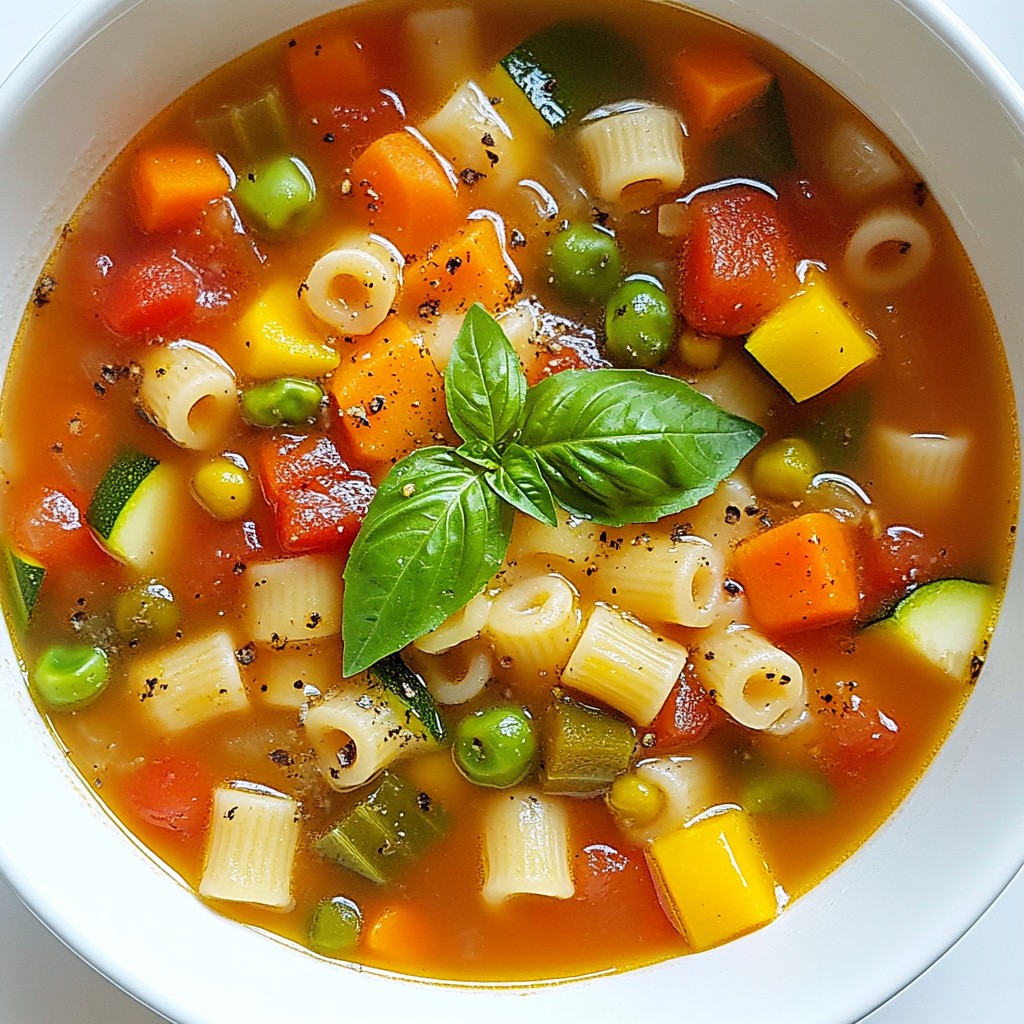
Looking for a warm dish that’s both hearty and nutritious? Try my Veggie Packed Minestrone Soup! This soup bursts with fresh flavors and offers a rainbow of vegetables, making it a perfect meal for everyone. Packed with nutrients, it warms the soul and keeps you satisfied. In this post, I’ll guide you through every step—from ingredients to cooking tips—so you can whip up this delicious soup with ease. Let’s dive in!
Why I Love This Recipe
- Healthy and Nutritious: This minestrone soup is packed with a variety of vegetables, making it a wholesome choice for any meal.
- Easy to Make: With simple ingredients and straightforward steps, this recipe is perfect for both novice and experienced cooks.
- Customizable: Feel free to swap in your favorite vegetables or beans, allowing for endless variations to suit your taste.
- Comforting and Delicious: This hearty soup is not only satisfying but also full of flavor, making it a favorite for chilly days.
Ingredients
Full list of ingredients
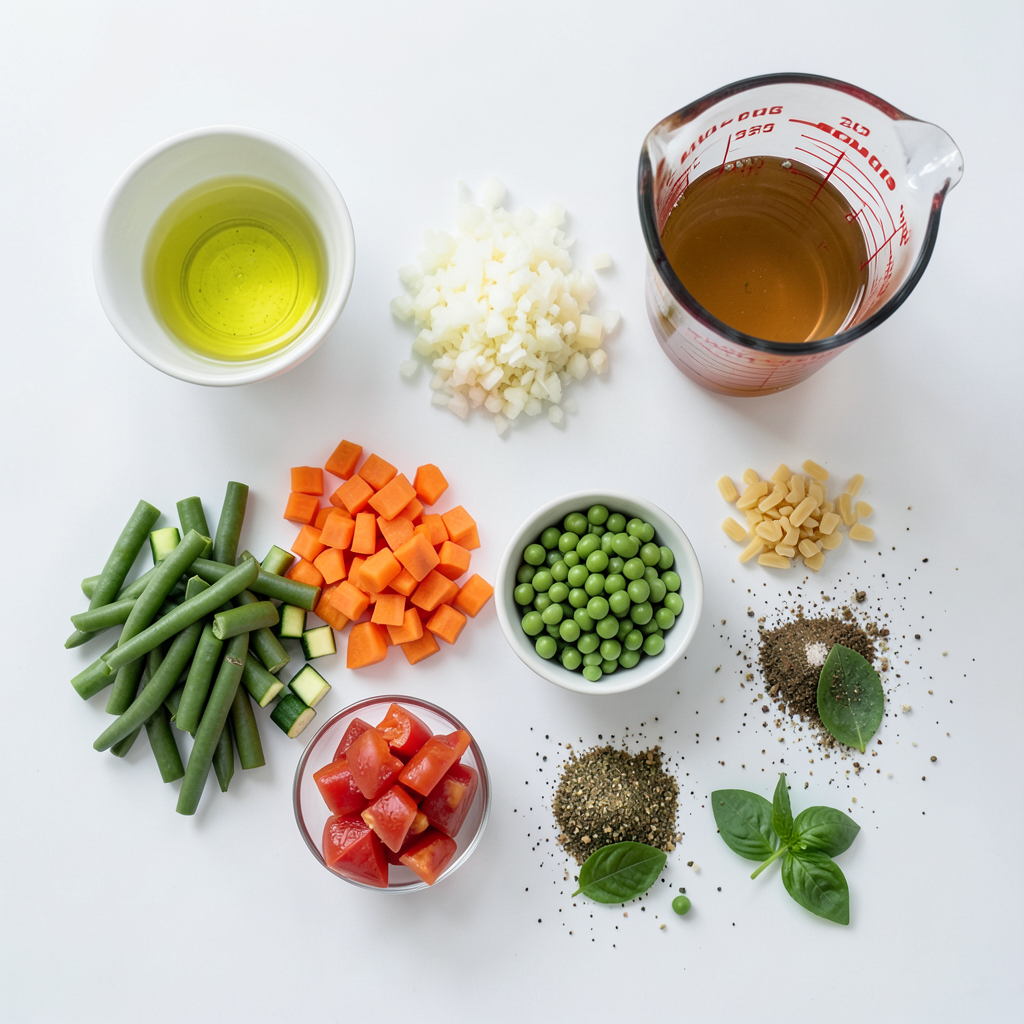
To make veggie packed minestrone soup, gather these ingredients:
- 2 tablespoons olive oil
- 1 medium onion, finely chopped
- 2 cloves garlic, minced
- 2 carrots, diced
- 1 zucchini, diced
- 1 red bell pepper, diced
- 1 cup green beans, chopped
- 1 can (14 oz) diced tomatoes in juice
- 4 cups vegetable broth
- 1 can (15 oz) kidney beans, rinsed and drained
- 1 cup frozen peas
- 1 tablespoon Italian seasoning
- Salt and pepper to taste
- 1 cup small pasta (like ditalini or elbows)
- Fresh basil leaves for garnish
Fresh vs. frozen vegetables
Using fresh vegetables gives the best taste. Fresh veggies often have more flavor and nutrients. You can pick them at your local market. However, frozen vegetables can save time and are just as good. They are picked at peak ripeness and frozen fast. If you choose frozen, make sure to check the label for added ingredients.
Substitutes for dietary preferences
If you need to adjust for dietary needs, there are great swaps. For a gluten-free option, use gluten-free pasta or skip pasta altogether. If you want a low-carb soup, add more veggies instead of pasta. You can also swap kidney beans for other beans like black beans or chickpeas. For a vegan version, ensure your broth is plant-based.
Step-by-Step Instructions
Detailed cooking process
Start by heating 2 tablespoons of olive oil in a large pot on medium heat. Add 1 medium onion and 2 cloves of minced garlic. Sauté until the onion turns soft and clear, about 5 minutes. Next, toss in 2 diced carrots, 1 diced zucchini, 1 diced red bell pepper, and 1 cup of chopped green beans. Cook this mix for 5 to 7 minutes. The veggies should begin to soften at this point.
Now, stir in 1 can of diced tomatoes with their juice, 4 cups of vegetable broth, 1 can of rinsed and drained kidney beans, and 1 cup of frozen peas. Add 1 tablespoon of Italian seasoning, plus salt and pepper to taste. Bring the soup to a boil, then lower the heat. Let it simmer for about 15 minutes. This helps all the flavors blend together nicely.
Tips for sautéing vegetables
When you sauté, keep the heat at medium. This helps the veggies cook through without burning. Stir the mix often to avoid sticking. If you want extra flavor, add a pinch of salt when you first add the onions. This draws out moisture and sweetens them. Remember, the goal is to keep the veggies bright and tender.
Cooking pasta in the soup
After simmering, it’s time to add the pasta. Stir in 1 cup of small pasta, like ditalini or elbows. Check the pasta package for cooking times, usually around 8 to 10 minutes. Make sure the soup stays at a simmer while the pasta cooks. Stir occasionally to prevent it from sticking. Once the pasta is al dente, taste the soup and adjust the seasoning if needed. Serve hot, topped with fresh basil leaves for a bright finish.
Tips & Tricks
How to enhance flavor profiles
To boost the flavor of your minestrone soup, start with quality ingredients. Fresh vegetables bring out the best taste. Use herbs like thyme or oregano for extra depth. A splash of lemon juice at the end brightens the soup. You can also add a parmesan rind while it simmers. This enhances the broth's richness.
Preventing overcooking vegetables
To keep your veggies firm and colorful, add them at the right time. Start with the hardest ones, like carrots and green beans. Add softer vegetables, like zucchini and peas, later in the cooking process. This way, each vegetable stays vibrant and tasty. Stir gently to avoid breaking them apart.
Making it ahead of time for best results
Minestrone soup tastes even better after a day in the fridge. Make it ahead of time and let the flavors blend. Store it in an airtight container to keep it fresh. When you reheat it, add a bit more broth if needed. This keeps the soup from getting too thick. Enjoy the rich taste of your minestrone soup the next day!
Pro Tips
- Use Fresh Vegetables: For the best flavor and texture, opt for fresh, in-season vegetables whenever possible. This will elevate the taste of your minestrone soup.
- Customize Your Beans: Feel free to mix up the beans in this recipe. Cannellini or black beans can add a different flavor and texture to your soup.
- Adjust the Pasta: You can substitute small pasta shapes with quinoa or farro for a gluten-free option. Just adjust the cooking time accordingly.
- Make it Ahead: This soup tastes even better the next day! Prepare it in advance and let the flavors meld overnight in the refrigerator.
Variations
Vegetarian vs. vegan options
Minestrone soup is naturally vegetarian. It uses vegetable broth and lots of veggies. If you want a vegan option, skip any dairy. Use vegetable broth and fresh herbs for flavor. You can add nutritional yeast to give it a cheesy taste without cheese. This makes the soup rich and fulfilling.
Adding protein sources
You can boost the protein in your minestrone soup easily. Add beans like chickpeas or lentils. These options not only add protein but also fiber. If you eat meat, try diced chicken or turkey. These meats cook well with the soup's flavors. For a quick fix, add pre-cooked sausage or bacon pieces for extra taste.
Seasoning alternatives for different tastes
Seasoning makes your minestrone soup unique. Italian seasoning is classic, but feel free to explore. Add smoked paprika for a smoky flavor or a pinch of cayenne for heat. For a fresh twist, add lemon juice or zest. This brightens the soup and adds freshness. If you like it herbaceous, try fresh thyme or rosemary. These will change the flavor profile while keeping it delicious.
Storage Info
Best storage practices for leftovers
Storing your veggie packed minestrone soup is easy. Let it cool first. Use airtight containers for storage. Fill the containers, leaving some space at the top. This space helps prevent spills when freezing. You can keep it in the fridge for up to four days.
Freezing tips for minestrone soup
To freeze minestrone soup, use freezer-safe containers or bags. Make sure to cool the soup completely. Portion it into smaller servings. This way, you can thaw only what you need. Label your containers with the date. You can freeze it for up to three months.
Reheating instructions for optimal taste
When you're ready to eat, heat the soup on the stove. Pour the soup into a pot. Warm it over medium heat, stirring often. If it’s too thick, add a splash of vegetable broth. You can also use the microwave. Heat in short bursts, stirring in between. Enjoy your warm, hearty soup!
FAQs
How long does veggie packed minestrone soup last?
Veggie packed minestrone soup can last 3 to 5 days in the fridge. Store it in an airtight container. To keep the flavor fresh, try to eat it within this time. If you want it to last longer, freezing is a great option. Just make sure to cool the soup completely before freezing.
Can I make minestrone soup in a slow cooker?
Yes, you can make minestrone soup in a slow cooker. Start by sautéing the onion and garlic in a pan. Then add them to the slow cooker with all the other ingredients. Set it on low for 6 to 8 hours or high for 3 to 4 hours. This method makes the soup rich and flavorful as it cooks slowly.
What other vegetables can be added?
You can add many kinds of vegetables to your minestrone soup. Some great options include:
- Spinach
- Kale
- Potatoes
- Corn
- Peas
- Leeks
Adding these can change the soup's flavor and nutrition. Feel free to use what you have on hand. Enjoy experimenting with your veggie packed minestrone soup!
This blog post covered how to make a hearty minestrone soup. We explored essential ingredients, cooking steps, and helpful tips. You learned how to enhance flavors, prevent overcooking, and store leftovers effectively. Variations included vegetarian choices and protein additions for every palate.
Minestrone soup is a simple dish with endless possibilities. Try different veggies or spices to make it your own. Enjoy your cooking adventure and savor the delicious meals ahead.