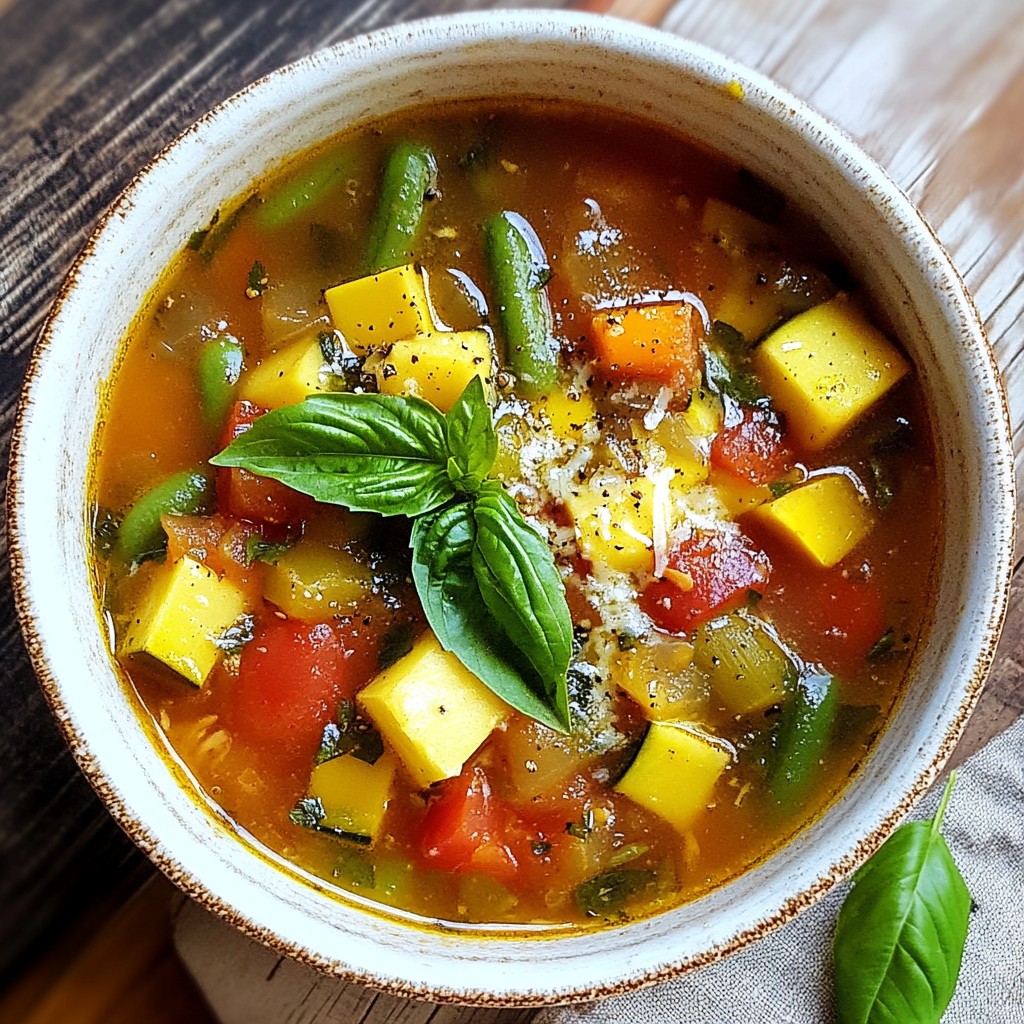
Are you looking for a warm and filling meal? My Veggie Packed Minestrone Soup is just what you need! This hearty dish is loaded with vibrant vegetables and rich flavors, making it perfect for any day. Whether you're a busy parent or a culinary newbie, I’ll guide you through simple steps to create a comforting bowl of goodness. Let’s dive in and discover the joy of making homemade minestrone!
Why I Love This Recipe
- Healthy and Nutritious: This soup is loaded with a variety of vegetables, making it a great source of vitamins and minerals.
- Comfort in a Bowl: Minestrone soup is the perfect dish to warm you up on a chilly day, offering both comfort and satisfaction.
- Easy to Make: This recipe comes together quickly, making it perfect for busy weeknights or meal prep.
- Customizable: You can easily adapt this soup to include your favorite veggies or whatever you have on hand.
Ingredients
List of Ingredients for Veggie Packed Minestrone Soup
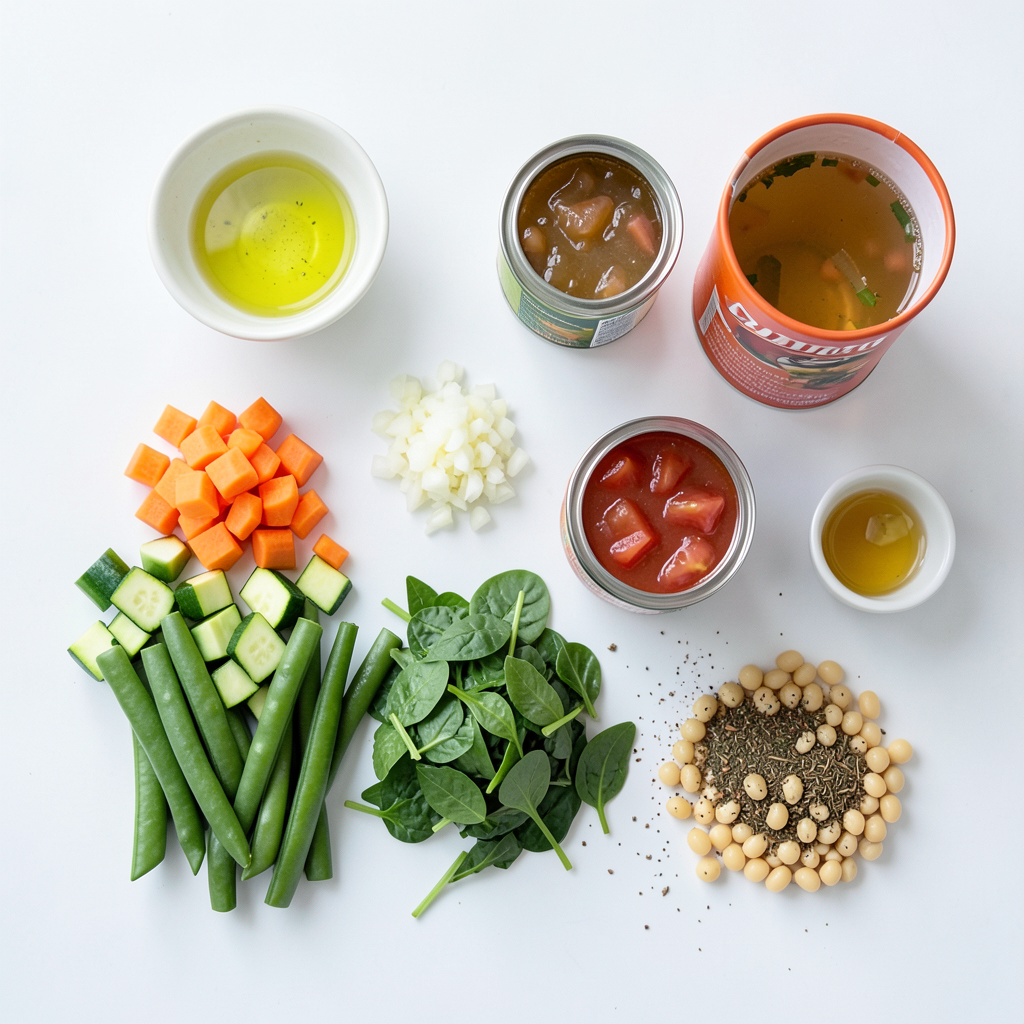
To make my Veggie Packed Minestrone Soup, gather these ingredients:
- 2 tablespoons olive oil
- 1 medium onion, diced
- 2 cloves garlic, minced
- 2 medium carrots, diced
- 2 celery stalks, diced
- 1 zucchini, diced
- 1 cup green beans, trimmed and cut into bite-sized pieces
- 1 can (14 oz) diced tomatoes, with juices
- 4 cups vegetable broth
- 1 can (15 oz) cannellini beans, rinsed and drained
- 1 cup fresh spinach, roughly chopped
- 1 teaspoon dried oregano
- 1 teaspoon dried basil
- Salt and pepper to taste
- 1 cup small pasta (like ditalini or shells)
- Grated Parmesan cheese (optional for topping)
Measurement Conversions
When cooking, you might need to convert some measurements. Here are a few helpful conversions:
- 1 tablespoon = 3 teaspoons
- 1 cup = 8 ounces
- 1 can (14 oz) = 1.75 cups
- 1 can (15 oz) = 1.875 cups
- 4 cups = 1 quart
Recommended Ingredient Brands
Using the right brands can enhance your soup's flavor. I recommend these:
- Olive Oil: California Olive Ranch or Pompeian
- Vegetable Broth: Swanson or Pacific Foods
- Canned Tomatoes: Muir Glen or Hunt’s
- Cannellini Beans: Goya or Eden Foods
- Parmesan Cheese: BelGioioso or Grana Padano
These brands provide quality and taste, making your minestrone soup even better!
Step-by-Step Instructions
Preparing the Base: Sautéing the Vegetables
Start by heating the olive oil in a large pot over medium heat. I like to use a sturdy pot for even heating. Once the oil is warm, add the diced onion. Sauté it for about 3-4 minutes until it turns translucent. This step adds a nice flavor base. Next, stir in the minced garlic, diced carrots, and celery. Cook these for an additional 5 minutes, stirring often to avoid burning. The smell will be amazing!
Now, add the diced zucchini and green beans to the pot. Cook them for about 3-4 minutes. This step helps keep the veggies fresh and bright. The colors will start to pop, and your kitchen will smell fantastic.
Simmering the Soup
After sautéing the veggies, pour in the diced tomatoes with their juices and the vegetable broth. Bring this mixture to a boil. Once boiling, turn the heat down to a simmer. At this point, add the rinsed cannellini beans, chopped spinach, oregano, and basil. Season with salt and pepper to your taste. I usually add a pinch of each and adjust later. Let the soup simmer for 15-20 minutes. This allows the flavors to blend perfectly.
Cooking the Pasta Separately
While the soup simmers, cook the small pasta in a separate pot. Follow the package instructions until the pasta is al dente. Once done, drain the pasta, then add it to the soup just before serving. This keeps the pasta from getting soggy. Taste the soup one last time and adjust seasonings if needed. Serve hot, and if you like, top it with grated Parmesan cheese. Enjoy your hearty, veggie-packed meal!
Tips & Tricks
Enhancing Flavor with Herbs and Spices
To boost the taste of your minestrone, use fresh herbs. Fresh basil or parsley adds brightness. You can also use dried oregano and thyme. These herbs work well with the soup’s veggies. If you want heat, add a pinch of red pepper flakes. This adds warmth without overpowering the other flavors. Taste as you go and adjust the herbs to your liking.
Adjusting Consistency: Thick or Thin
You may prefer your soup thick or thin. For a thicker soup, cook it longer. This allows the veggies and pasta to break down. You can also mash some beans against the pot. If you like it thinner, add more broth. Stir in extra vegetable broth as needed. This helps create the perfect texture for your taste.
Best Cooking Tools for Making Soup
Having the right tools makes cooking easier. A large pot is key for soups. It should be deep enough to hold all the ingredients. A wooden spoon is great for stirring without scratching the pot. Use a sharp knife for chopping veggies. A cutting board is also essential for safety. Finally, a ladle helps serve the soup neatly. With these tools, you’ll create delicious minestrone soup with ease!
Pro Tips
- Fresh Ingredients: Use fresh, seasonal vegetables for the best flavor and nutrition.
- Flavor Boost: Sauté the vegetables until they are slightly caramelized to enhance the overall flavor of the soup.
- Pasta Cooking: Cook the pasta separately to prevent it from becoming mushy in the soup.
- Storage Tips: This soup stores well in the refrigerator for up to 4 days; just add a splash of broth when reheating.
Variations
Seasonal Vegetable Swaps
You can change the soup with different veggies based on the season. In spring, add peas or asparagus. Summer is great for fresh corn or bell peppers. In fall, use squash or sweet potatoes. Winter brings hearty greens like kale or collards. Swapping out vegetables keeps it fresh and fun. Always aim for colorful and seasonal produce. This makes your minestrone more vibrant and tasty.
Adding Protein: Meat Options
If you want a meatier soup, consider adding protein. Ground beef or turkey can add great flavor. Sauté it with the onion and garlic for a rich taste. You can also use diced chicken or sausage. Just cook it until golden brown before adding the other ingredients. For a smoky kick, try adding pancetta or bacon. These meats add depth and make the soup even heartier.
Vegan and Gluten-Free Adaptations
To make this soup vegan, skip the cheese and use vegetable broth. You can add more beans or lentils for protein. For gluten-free options, choose gluten-free pasta. Quinoa also makes a nice substitute. Always check labels to ensure all ingredients are gluten-free. These changes keep the soup delicious while meeting dietary needs. Enjoy a bowl that's both hearty and friendly for everyone!
Storage Info
How to Store Leftover Minestrone Soup
To store leftover minestrone soup, let it cool first. Then, place it in an airtight container. This helps keep flavors fresh. You can keep it in the fridge for up to three days. Make sure to label the container with the date.
Freezing Tips for Future Meals
Freezing minestrone soup is easy and smart. Use freezer-safe containers or bags. Leave some space at the top, as the soup expands when frozen. You can freeze it for up to three months. When ready to eat, just thaw it in the fridge overnight.
Reheating Instructions for Best Results
To reheat the soup, pour it into a pot over medium heat. Stir often to help it warm evenly. If it seems thick, add a splash of broth or water to loosen it. You can also microwave it in a bowl. Heat in short bursts, stirring in between. Enjoy it hot for the best taste!
FAQs
How Long Does Minestrone Soup Last in the Fridge?
Minestrone soup lasts about 3 to 4 days in the fridge. Store it in an airtight container to keep it fresh. If you want to keep it longer, freezing is a great option. Just remember that the pasta might get mushy after thawing.
Can I Use Fresh Beans Instead of Canned?
Yes, you can use fresh beans! However, fresh beans need cooking before you add them to the soup. Start by soaking them overnight. Then, cook them until tender. This might take longer than using canned beans, but the flavor is worth it!
What Are the Health Benefits of Veggie Packed Minestrone Soup?
Veggie packed minestrone soup is very healthy. It is full of vitamins from the veggies. The beans add protein and fiber. Eating this soup can help with digestion and keep your heart healthy. Plus, it’s low in calories, making it a great choice for a light meal. Enjoying a bowl can boost your mood and keep you warm!
This blog post shared all you need for veggie-packed minestrone soup. We explored key ingredients, cooking steps, and tips for the best flavor. You can swap veggies, add protein, and choose vegan options too. I covered storage tips and answered common questions.
Now, you can make this warm, healthy soup easily. Enjoy your cooking journey!