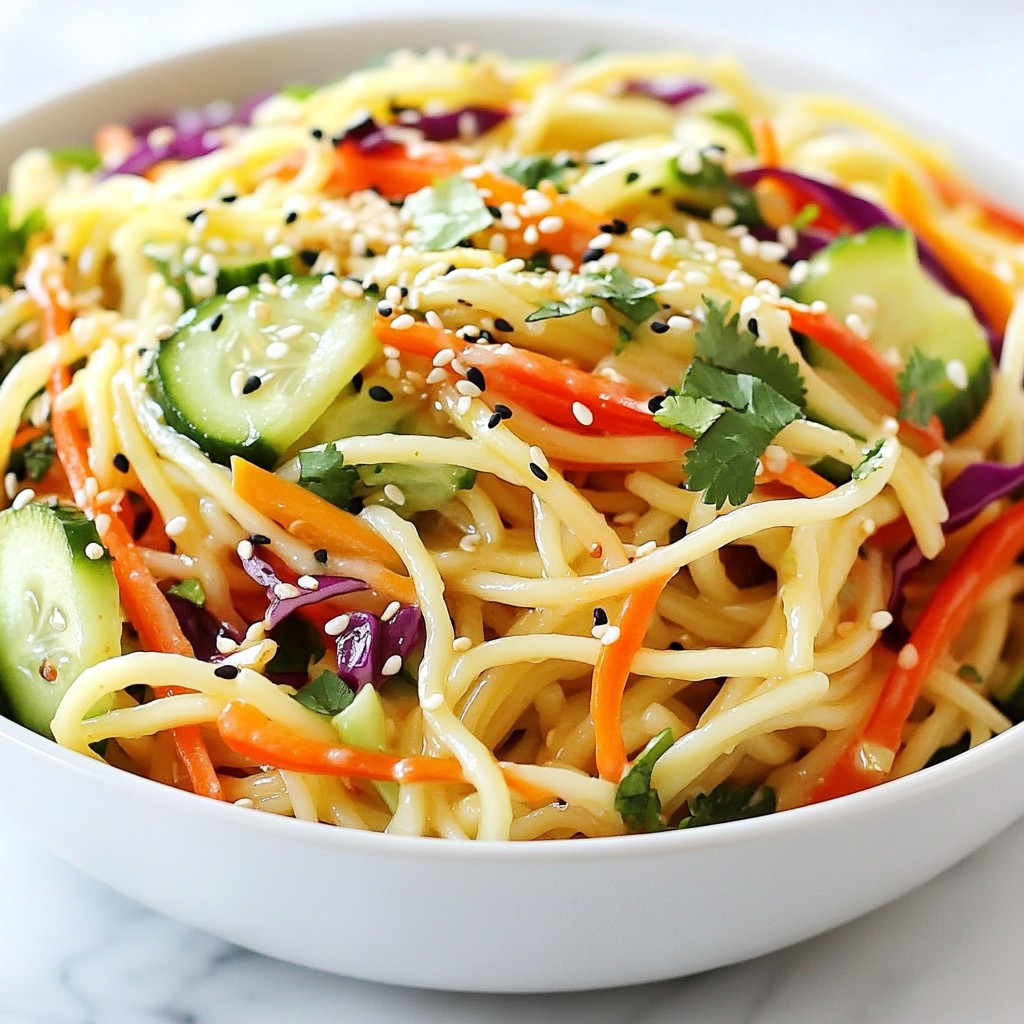
Are you ready to dive into a bowl of flavor? My Sesame Ginger Noodle Salad is not just fresh; it's a tasty delight you can whip up in no time. With colorful vegetables and zesty dressing, it’s perfect as a side or full meal. Plus, I’ll share tips for customizations, storage, and more. Let’s get started on this tasty journey that promises to please your taste buds!
Why I Love This Recipe
- Fresh and Colorful: This salad is packed with vibrant vegetables that not only look great but also add a variety of textures and flavors.
- Quick and Easy: With a prep time of just 15 minutes, this recipe is perfect for a quick lunch or dinner, making it a great option for busy days.
- Customizable: You can easily swap out vegetables or proteins to fit your taste preferences, making this salad versatile for any occasion.
- Healthy and Delicious: This dish is not only satisfying but also packed with nutrients, thanks to the variety of fresh ingredients.
Ingredients
Main Ingredients
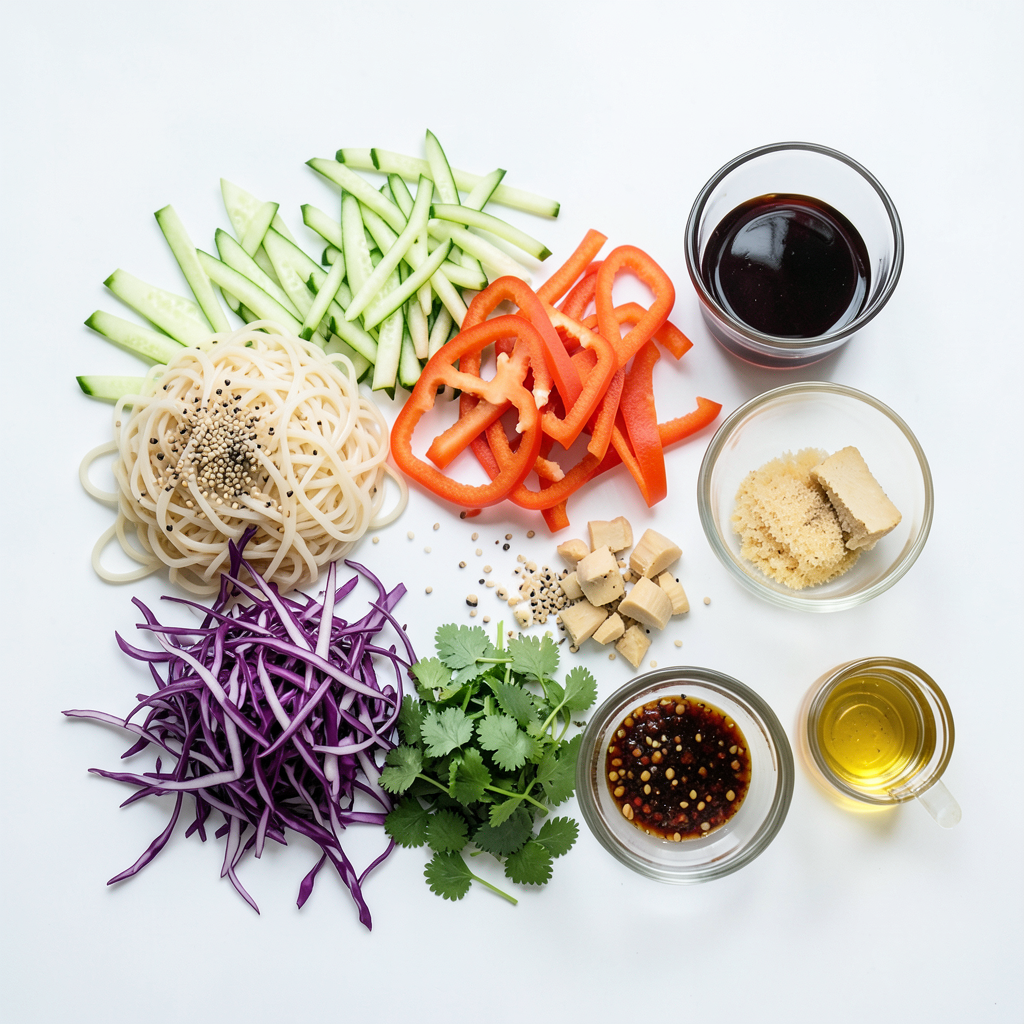
- 8 oz rice noodles
- 1 cucumber, julienned
- 1 bell pepper (red or yellow), thinly sliced
- 1 cup shredded carrots
- 1 cup shredded purple cabbage
- 1/4 cup green onions, chopped
- 1/4 cup sesame seeds, toasted
- 1/4 cup fresh cilantro, chopped
- 1/4 cup soy sauce (or tamari for gluten-free)
- 2 tablespoons rice vinegar
- 1 tablespoon sesame oil
- 1 tablespoon fresh ginger, grated
- 1 teaspoon honey or maple syrup
- 1 teaspoon chili paste (optional)
This salad shines with fresh rice noodles and colorful veggies. Each bite bursts with flavor. The rice noodles are light and chewy. They soak up the dressing well. The fresh vegetables add crunch and color. Cucumber and bell pepper offer a crisp bite, while carrots and cabbage bring sweetness and texture.
Optional Add-ins
- Additional proteins (tofu, chicken, shrimp)
- Extra spices and flavorings
You can make this salad even better with add-ins. Tofu works great for a plant-based option. Chicken or shrimp adds protein and heartiness. For an extra kick, try adding chili flakes or sesame oil. These choices let you create a salad that suits your taste.
Equipment Needed
- Mixing bowls
- Whisk
- Pot for boiling noodles
To prepare this dish, gather a few simple tools. A pot is needed to boil the noodles. Use a whisk to mix the dressing well. Mixing bowls help combine the ingredients easily. With these tools, you can whip up this tasty salad quickly.
Step-by-Step Instructions
Cooking the Noodles
To cook the rice noodles, bring a pot of water to a boil. Add the noodles and cook them according to the package instructions, usually around 4-6 minutes. Stir the noodles gently to keep them from sticking. Once they are tender, drain the noodles in a colander. Rinse them under cold water. This stops the cooking process and keeps them from getting mushy. For the best texture, look for noodles that are soft but still a bit firm, known as al dente.
Preparing the Vegetables
Start by julienning the cucumber. To do this, cut off the ends, and slice it lengthwise. Remove the seeds if you like. Then, cut it into thin strips. For the bell pepper, cut it in half, remove the seeds, and slice it into thin strips. For the carrots, you can shred them using a grater or a food processor. The purple cabbage should also be sliced thinly. In a large bowl, mix all the chopped vegetables together. Toss them gently to ensure they are evenly distributed.
Making the Dressing
In a separate bowl, whisk together the soy sauce, rice vinegar, sesame oil, grated ginger, honey or maple syrup, and chili paste if you want some heat. Mix these liquid ingredients until they are well combined. If you need a gluten-free option, just use tamari instead of soy sauce. You can adjust the sweetness by changing the amount of honey or maple syrup, depending on your taste. This dressing is key to bringing all the flavors together.
Tips & Tricks
Perfecting the Salad
To make your Sesame Ginger Noodle Salad shine, marinate it for at least 10-15 minutes. This time lets the flavors blend well. If you let it sit longer, the taste deepens even more. Just be careful not to marinate too long; the noodles can get soggy.
To prevent soggy noodles, rinse them well under cold water after cooking. This stops the cooking process and cools them down. Drain them well before adding to the salad. This keeps everything fresh and crunchy.
Presentation Ideas
When it comes to serving, think big! Use a large bowl for family-style serving. This makes it feel festive. You can also serve individual bowls for a more personal touch.
For garnishing, sprinkle extra sesame seeds on top. A few sprigs of cilantro add color and freshness. You could also add lime wedges on the side for a zesty kick.
Customization Suggestions
Dietary needs vary, so feel free to swap ingredients. If you need it gluten-free, use tamari instead of soy sauce. For a vegan option, replace honey with maple syrup.
Want to change the flavor? Add more ginger if you love spice. You can also toss in some crushed peanuts for crunch. Make it your own!
Pro Tips
- Chill the Noodles: After rinsing your noodles, let them sit in the refrigerator for a few minutes before adding them to the salad. This enhances the overall freshness of the dish.
- Customize Your Veggies: Feel free to add or substitute vegetables based on what you have on hand. Ingredients like snap peas, radishes, or even edamame work great!
- Make It Ahead: This salad can be prepared a few hours in advance. Just keep the dressing separate until you’re ready to serve to prevent sogginess.
- Spice It Up: Adjust the spice level of your salad by varying the amount of chili paste or adding sliced fresh chili for an extra kick.
Variations
Salad Additions
You can enhance your Sesame Ginger Noodle Salad by adding nuts or seeds.
- Nuts: Try toasted peanuts or cashews for a crunchy bite.
- Seeds: Sunflower seeds or pumpkin seeds add a nice texture.
You can also swap in seasonal vegetables.
- Spring: Add snap peas or radishes for freshness.
- Fall: Use roasted butternut squash for a warm touch.
Alternative Dressing Options
Experiment with different vinaigrette flavors.
- Citrus: A lime or orange vinaigrette gives a bright twist.
- Spicy: Add sriracha or chili oil for heat.
If you prefer a creamy dressing, blend tahini or yogurt with the basic ingredients.
- This adds richness and a different taste profile.
Regional Variations
You can draw inspiration from other Asian cuisines.
- Thai influence: Add peanut butter and lime for a Thai twist.
- Korean flavors: Mix in gochujang for a spicy kick.
Fusion ideas can make this salad even more fun.
- Mexican touch: Add black beans and corn for a colorful mix.
- Mediterranean flair: Toss in olives and feta for a unique twist.
Storage Info
Best Practices for Storing
Store your Sesame Ginger Noodle Salad in an airtight container. Glass containers work great, but plastic ones are fine too. Make sure to keep the salad in the fridge. This helps the flavors stay fresh. If you have leftover dressing, store it separately to keep the noodles from getting soggy.
Reheating Guidance
You can eat this salad cold, which is how I love it best. If you prefer it warm, use a microwave. Heat it for just a few seconds at a time. Stir the noodles gently to keep the texture nice. If the noodles get mushy, that means they were heated too long.
Shelf Life
This salad stays good for about three days in the fridge. After that, it may lose its crunch and flavor. Watch for signs of spoilage, like a bad smell or slimy noodles. If you notice these, it’s best to toss the salad. Always trust your senses when it comes to food safety!
FAQs
Can I make this salad ahead of time?
Yes, you can easily make this salad ahead of time. Here are some meal prep tips:
- Cook the rice noodles and rinse them.
- Chop your veggies and store them in separate containers.
- Whisk the dressing and keep it in a jar.
- Combine everything just before serving. This keeps the noodles and veggies crisp.
Is Sesame Ginger Noodle Salad gluten-free?
Yes, you can make this salad gluten-free! Use tamari instead of soy sauce. Here are some gluten-free alternatives:
- Rice noodles are naturally gluten-free.
- Check that your tamari is gluten-free.
- Most veggies are gluten-free, so feel free to add your favorites.
What proteins can I add to make it a main dish?
Adding protein can make this salad a full meal. Here are some tasty options:
- Cooked chicken adds a nice flavor.
- Shrimp gives it a sweet touch.
- Tofu is great for a veggie option.
- Edamame is also a fun choice for extra protein.
This salad mixes rice noodles, fresh veggies, and a tasty dressing. You can jazz it up with proteins and spices. I shared steps to cook noodles, prepare veggies, and make the dressing. Remember to snack on it with good storage tips. Feel free to customize based on what you like or have on hand. This recipe is not just easy; it’s also delicious! Enjoy creating your own unique version of this noodle salad.