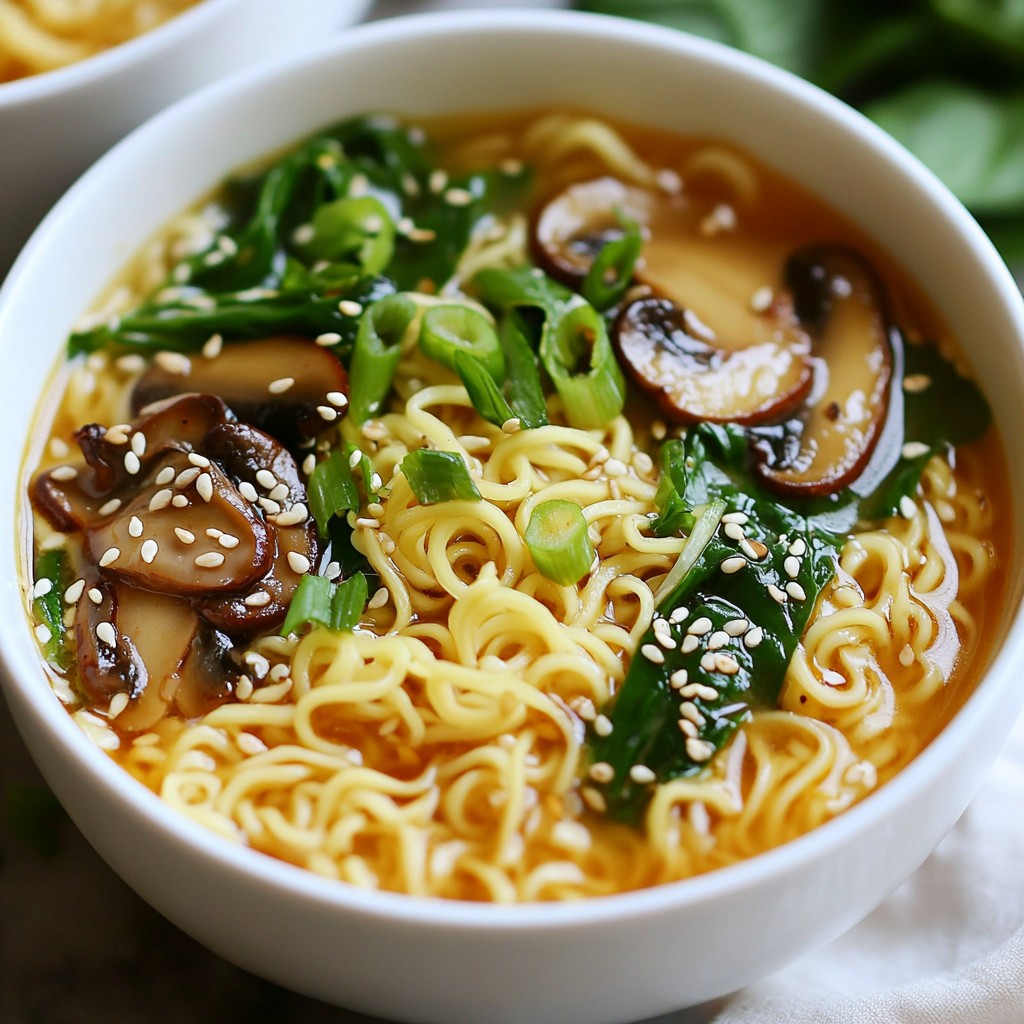
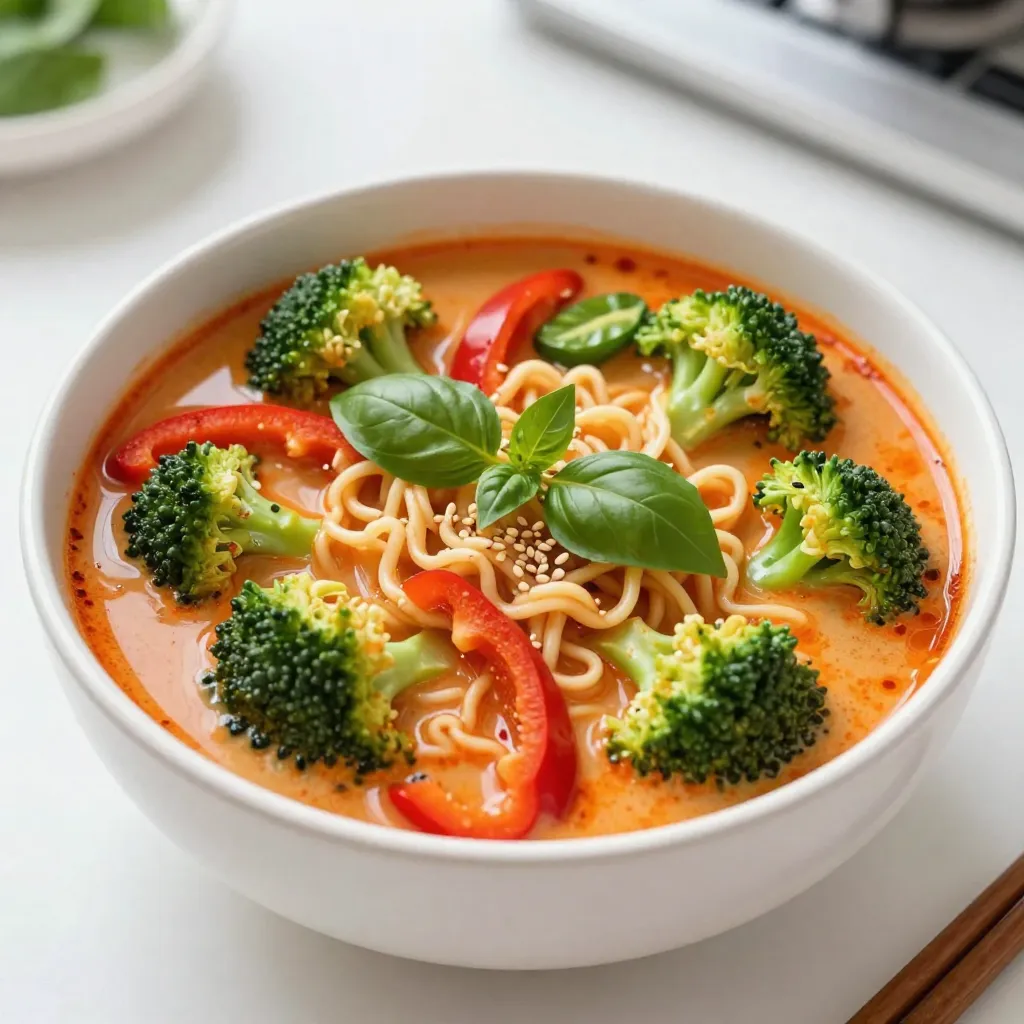
Craving a warm and delicious meal? Try my Red Curry Vegetable Ramen! This dish packs bold flavor and is perfect for a cozy night in. With fresh veggies and a rich broth, it’s a comfort bowl you don’t want to miss. In this post, I’ll share simple steps, easy ingredient swaps, and tips to customize the heat level. Let’s dive into crafting your new favorite ramen!
Why I Love This Recipe
- Flavor Explosion: This dish combines rich coconut milk with spicy red curry, creating a delightful flavor profile that warms the soul.
- Loaded with Veggies: It’s packed with vibrant vegetables that not only add nutrition but also a beautiful presentation.
- Quick and Easy: With a total cooking time of just 30 minutes, this recipe is perfect for a weeknight dinner.
- Customizable: You can easily adjust the spice level or swap in your favorite vegetables, making it versatile for any palate.
Ingredients
List of Ingredients
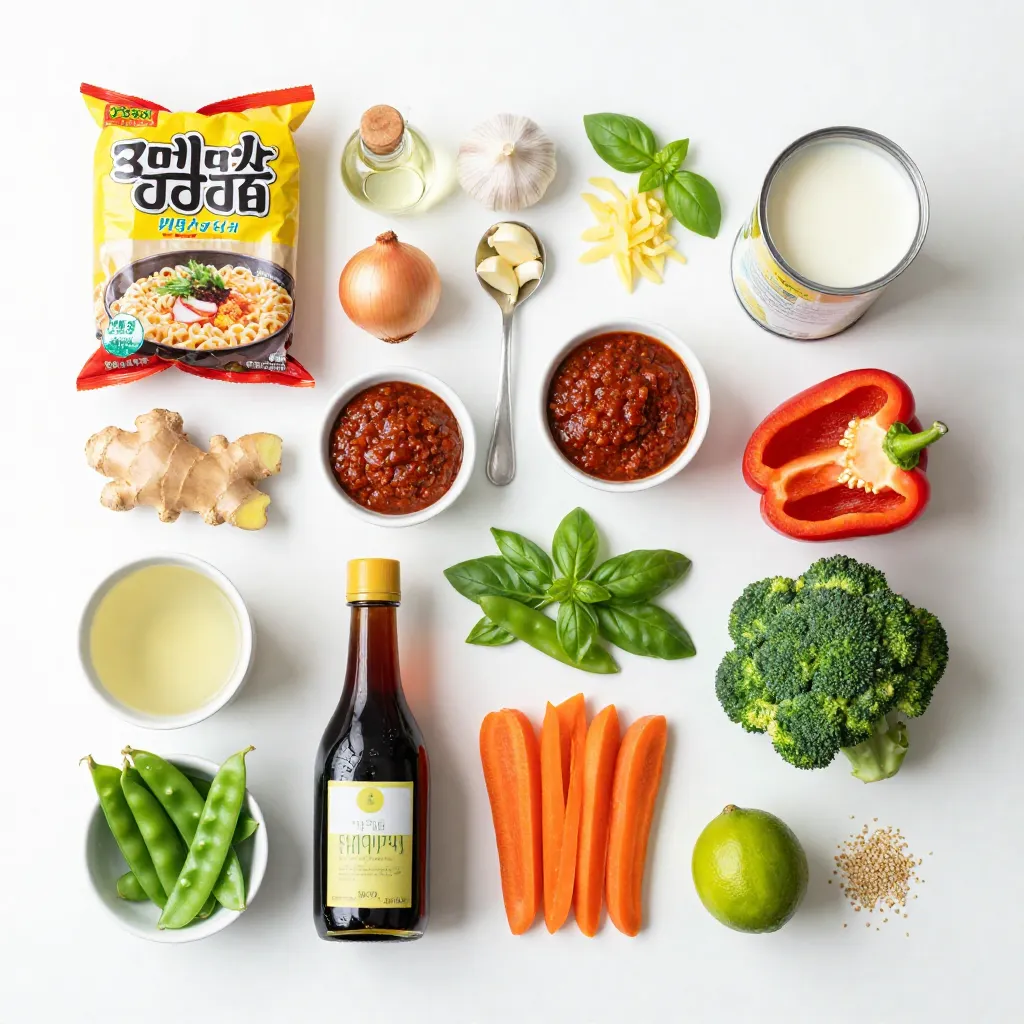
To make a delicious red curry vegetable ramen, you will need:
– 2 packs of ramen noodles (fresh or dried)
– 1 tablespoon coconut oil
– 1 small onion, thinly sliced
– 3 cloves garlic, minced
– 1 tablespoon fresh ginger, grated
– 2 tablespoons red curry paste (adjust to taste)
– 1 can (14 oz) coconut milk
– 2 cups vegetable broth
– 1 red bell pepper, sliced
– 1 cup broccoli florets
– 1 cup snap peas
– 1 carrot, julienned
– 2 tablespoons soy sauce (or tamari for gluten-free)
– Juice of 1 lime
– Fresh basil leaves for garnish
– Sesame seeds for garnish
Ingredient Substitutions
You can swap ingredients if you need to. Here are some ideas:
– Ramen Noodles: Use rice noodles or soba noodles for a different taste.
– Coconut Oil: Olive oil or avocado oil can work well instead.
– Vegetable Broth: You can make your own broth or use store-bought.
– Red Curry Paste: Try yellow curry paste for a milder flavor.
– Vegetables: Use any fresh veggies you have. Bell peppers, carrots, and zucchini all fit well.
Condiments and Garnishes
These extras can make your ramen shine:
– Fresh Basil: Adds a nice flavor and makes the dish look pretty.
– Sesame Seeds: Sprinkle these for crunch and a nutty taste.
– Lime Wedges: Serve on the side for a zesty kick. Squeeze fresh juice over the ramen before eating.
Feel free to mix and match based on what you enjoy or have at home!
Step-by-Step Instructions
Cooking the Ramen Noodles
Start by boiling water in a large pot. Add your ramen noodles. Cook them according to the package instructions. Fresh noodles usually take less time. Once cooked, drain them and set aside.
Sautéing Aromatics and Adding Curry Paste
In a big saucepan, heat one tablespoon of coconut oil over medium heat. Add one small, thinly sliced onion. Sauté for about three to four minutes until it turns clear. Next, stir in three minced garlic cloves and one tablespoon of grated ginger. Cook for one more minute until you smell the lovely aroma. Add two tablespoons of red curry paste. Stir it well. Let it cook for one to two minutes. This helps the flavors mix.
Incorporating Liquids and Simmering Vegetables
Now it’s time to add liquids. Pour in one can of coconut milk and two cups of vegetable broth. Stir everything together. Bring this mix to a gentle simmer. Now add your vegetables. Use one sliced red bell pepper, one cup of broccoli florets, one cup of snap peas, and one julienned carrot. Let them simmer for about five to seven minutes. You want them tender yet still crisp.
Combining Noodles with Broth
After the vegetables are ready, stir in two tablespoons of soy sauce or tamari. Squeeze in the juice of one lime. Taste your broth and adjust the flavors if needed. Now add the cooked ramen noodles to the broth. Gently toss everything together so the noodles soak up the flavors. Let them heat for one to two minutes. Then, serve your ramen in bowls, making sure each bowl has plenty of broth and veggies.
Tips & Tricks
Customizing Spice Levels
You can adjust the spice in your red curry vegetable ramen easily. Start with one tablespoon of red curry paste. Taste as you go. If you want more heat, add more curry paste or a pinch of chili flakes. For a milder version, use less curry paste or choose a sweet red curry paste. Enjoy finding your perfect balance of flavor!
Cooking Techniques for Perfectly Crisp Vegetables
To keep your vegetables crisp, do not overcook them. After adding the veggies, simmer for just 5-7 minutes. This method works well for red bell pepper, broccoli, snap peas, and carrot. You want them tender but still bright and crunchy. If you like more crunch, sauté them briefly in coconut oil before adding to the broth. This step adds extra flavor and keeps them crisp.
Plating for Presentation
Presentation matters, even in a cozy bowl of ramen. Use deep bowls to hold the broth and toppings. Start by adding the noodles, then ladle the broth over them. Arrange the vegetables neatly on top. Finish with fresh basil leaves and a sprinkle of sesame seeds for a pop of color. A lime wedge on the side brightens the dish and adds a fresh touch. This makes your ramen look as good as it tastes!
Pro Tips
- Adjust Spice Level: If you prefer a milder dish, start with less red curry paste and gradually add more to taste.
- Veggie Variations: Feel free to swap in your favorite vegetables like zucchini, baby corn, or mushrooms for a personalized touch.
- Make It Heartier: For added protein, consider adding tofu, chickpeas, or edamame to the ramen.
- Garnish Wisely: Fresh herbs like cilantro or mint can also be used in place of basil for a different flavor profile.
Variations
Vegan and Gluten-Free Options
You can easily make this dish vegan. Just use plant-based ramen noodles. Choose gluten-free options for soy sauce, like tamari. This keeps the flavors rich and the meal plant-based. The coconut milk adds creaminess, so it stays satisfying. You can also replace any animal products with more veggies or tofu.
Adding Protein (Tofu, Chicken, etc.)
If you want more protein, add tofu or chicken. For tofu, use firm tofu, cut into cubes. Sauté it in the coconut oil until golden. For chicken, use thin strips. Cook them with the onions and garlic. Both options add flavor and make the dish heartier. They blend well with the curry and veggies.
Alternative Vegetables to Use
Feel free to switch up the veggies. You can add spinach, zucchini, or mushrooms. Each brings a unique taste and texture. Kale works too; just chop it fine. Sweet potatoes can add a nice sweetness. The key is to keep them colorful and fresh. This dish is all about vibrant flavors and textures.
Storage Info
Best Practices for Storing Leftovers
To keep your red curry vegetable ramen fresh, store it in an airtight container. Place the noodles and broth in separate containers. This helps prevent the noodles from becoming mushy. Refrigerate the soup within two hours of cooking. It will stay good for up to three days.
Reheating Instructions
When you’re ready to eat, reheat the ramen on the stove or in the microwave. If using the stove, pour the broth into a pot. Heat it over medium until it simmers. Add the noodles and veggies, stirring gently. If using a microwave, heat the broth in a safe bowl for two minutes. Stir and add the noodles, then heat for one more minute.
Freezing Ramen Soup
You can freeze the red curry ramen for later! To do this, let it cool completely. Then, pour the soup into freezer-safe bags or containers. Remove as much air as you can. Label the bags with the date. It can stay in the freezer for about three months. When you’re ready to enjoy it, thaw it overnight in the fridge. Reheat as mentioned before.
FAQs
What type of ramen noodles are best for this recipe?
I prefer using fresh ramen noodles. They are soft and cook quickly. Dried ramen also works well. Just follow the package instructions. Both types soak up the rich curry flavor nicely.
Can I use homemade vegetable broth?
Absolutely! Homemade vegetable broth adds great flavor. Just make sure to season it well. Use scraps from vegetables to make broth. This adds depth and keeps it fresh. Your ramen will taste even better with your own broth.
How can I make this dish less spicy?
To tone down the spice, use less red curry paste. Start with one tablespoon and taste. You can also add more coconut milk. This will balance the heat. Adding a little sugar or honey can help too. Adjust until it fits your taste!
In this blog post, we explored the ingredients needed for a tasty ramen dish. We discussed possible substitutions, perfect cooking techniques, and smart ways to customize flavors. I also shared tips for serving your ramen beautifully and ways to make it vegan or gluten-free. Proper storage and reheating methods ensure your leftovers taste great. Remember, cooking is about creativity and fun! Use your favorite ingredients and make this ramen your own. Enjoy every slur